
 By estherdidsang@gmail.com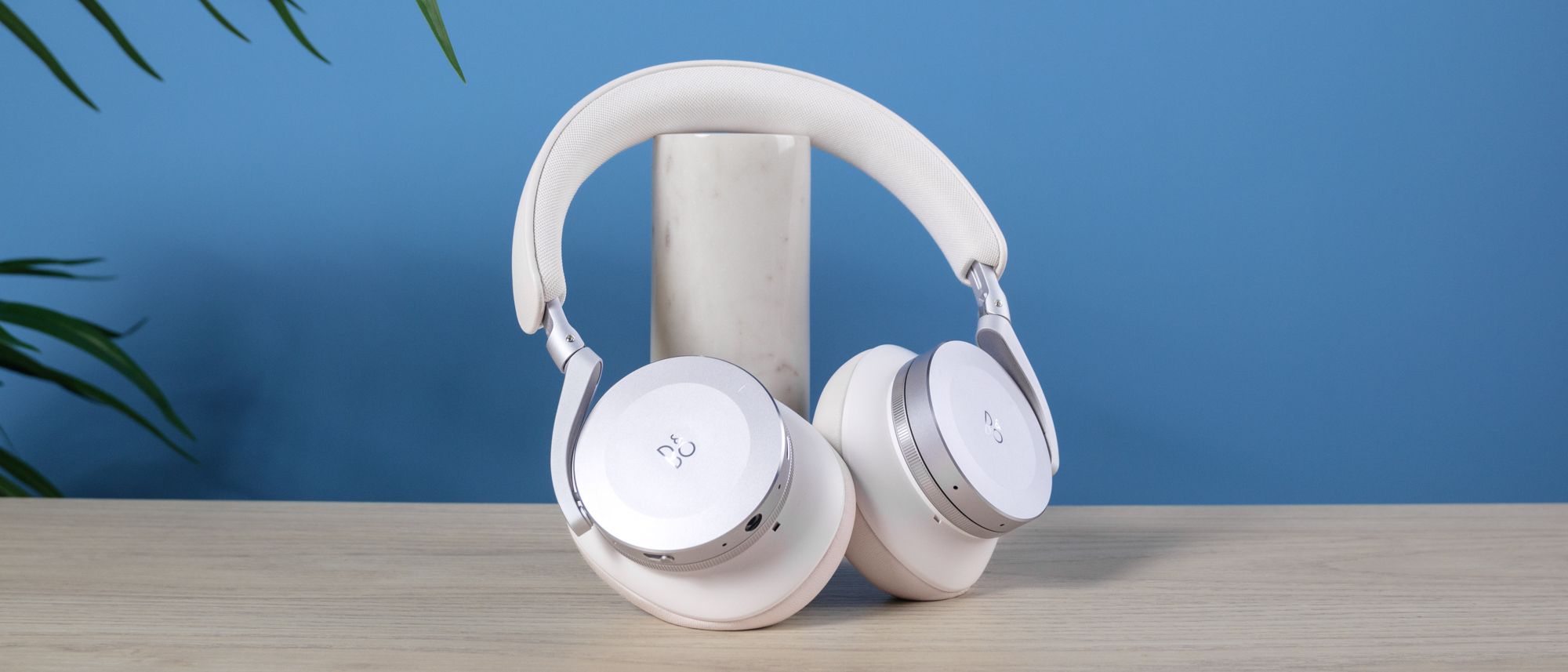
I’ll admit it straight away: I’ve fallen head over heels in love with the Bang & Olufsen Beoplay H95 — in my opinion, some of the best over-ear headphones on the premium market. Chief among the virtues of the H95 are their sublime sound quality: clear and expansive treble; punchy but detailed mids; rich yet supremely balanced bass; plus, a gloriously wide soundstage.
Better yet, the H95 are styled beautifully, with craftsmanship worthy of the Norse pantheon. Their leather earcups (sorry, vegans) and padded headband are extremely comfortable, and with an IP53 rating, you can stand getting caught in the rain.
Obviously, none of the above comes cheap — especially not when made by Bang & Olufsen. And letting the otherwise stellar show down slightly is the ANC, which, although not terrible, feels a little weak for a $1,200 set of cans.
Bang & Olufsen Beoplay H95 review: Specs
Bang & Olufsen Beoplay H95 review: Price & availability

- $1,200 / £879 MSRP
- Around the $850 / £600 with deals in 2026
- Luxury finesse a cut above premium competition
The H95 were originally released back in 2020. The design hasn’t changed since, with the exception of colorways. In 2026, you can buy the H95 in blue, brown, black, or white/gold. I tested a slightly older model in white/silver, which are no longer stocked on the B&O site — but performance hasn’t changed.
As a rule, Bang & Olufsen gear doesn’t come cheap, and the Beoplay H95 are no exception. In the U.S., the H95 cost a whopping $1,199, while in the U.K., although not quite as extremely priced, they still cost a buttock-clenching £879 at Amazon. However, that’s MSRP, and I’ve seen them drop as low as $850 in the States and £599 in Britain at the time of writing.
This puts the H95 way, way beyond much of our favorite premium closed-back competition. The Bose QuietComfort Ultra Gen 2, for example, cost a mere $449; while the Bowers & Wilkins PX7 S3 cost $479; and the Apple AirPods Max cost $549. We’re obviously into ultra-premium territory here, at least in the States, where the H95 compete with the $1,099 Focal Bathys MG.
So, is the steep price worth it over, say, the Bose QuietComfort Ultra Gen 2? Probably not. I use the Bose at work, and they’re fantastic. But it’s kinda like asking whether a Ferrari is worth buying over a BMW. If you have the money, the H95 give you a luxury finesse that’s just a cut above the rest.
Bang & Olufsen Beoplay H95 review: Design & comfort

- Beautiful Scandi design and build quality
- Very comfortable thanks to premium materials
- Not for vegans
The B&O Beoplay H95 are gorgeous to behold, and then to actually hold, too. Aesthetically, they’re pure Scandi chic — simple, minimalist and contemporary. Despite the design being a few years old now, it hasn’t aged a day.
Build quality is phenomenal, partly thanks to the premium materials used: brushed aluminum for the structural bits, lambskin leather earcups, a combined leather and fabric headband — it’s all super luxurious. It isn’t just for show, though, and the H95 are well put together, too, feeling like a long-term investment. The construction is up there with the superbly crafted (and equally pricey) magnesium Focal Bathys, and a big step up over the rattly Bose QC Ultra Gen 2.
Unfortunately, there’s no faux-leather version, so vegans be warned! For vegan-friendly audiophile headphones, check out the FiiO FT13 ($329).

The H95 come with a square, hard-shell aluminum carry case. It’s very protective, but it scratches extremely easily and is hella bulky — which renders it problematic when carrying around in your bag. After scratching my case up taking it to work, I now just leave it at home. I’d prefer a hardened fabric case, as on the Focal Bathys and Bose QC Ultra Gen 2. Thankfully, the H95 fold, so they’re easy to slot into a bag on their own… just avoid them getting crushed.
The H95 are IP53 rated, meaning they’re dust-protected (that’s the 5) and will hold up against light sprays of water (the 3). As such, you needn’t worry about getting caught in a rain shower. IPX3 also makes them sweatproof, although I’d question the sense of getting $1,200 headphones all stinky and sweaty. If you will be doing that, the earcups can at least be removed with a simple twist, then replaced… for $149 a go.
Comfort
Despite all the luxurious materials, the H95 still feel nice and light on the head, although I prefer a suspended headband setup — like that on the Audeze LCD-X ($1,099) — for the feeling of true weightlessness.

The leather earcups are super soft, with thick padding inside. The same is true for the fabric headband interior, too. I love the capacious depth of the earcups, meaning I’ve never felt my helixes touch the drivers. There’s a soft fabric gauze inside the earcups, which is in reach of my ears — but it’s silky soft, delicately thin and, being elasticated, extremely forgiving, so no issues there. I’ve worn the H95 for hours at a time with zero complaints.
Bang & Olufsen Beoplay H95 review: Controls

- Combination of physical and touch controls
- Physical dials good but easy to knock
- Touch controls surprisingly reliable
The H95 are operated via a combination of physical and touch controls. On each earcup is a dial. The left controls noise cancellation, allowing you to rotate between transparency mode and ANC, and then to dial in the amount of cancellation you want — different chimes let you know when in each mode, and when ANC is maxed. The right-hand dial controls volume.
Both are easy to use, even when walking, although I’d have liked a little more tension on the dials. I found it easy to knock them when adjusting the headset or repositioning my (long) hair.
Playback controls are assigned to the right earcup, which has a touch-sensitive face. A tap pauses/plays; a finger swipe towards your face skips a track; and a swipe towards the back of your head goes backward. I normally hate touch controls, but I’ve got on with these just fine. Weirdly, they’re less easy to knock and engage than the dials, yet I’ve never failed to trigger them when I want to.
Bang & Olufsen Beoplay H95 review: Connectivity

- Bluetooth 5.1
- USB-C and 3.5mm connectivity best
- BT multipoint for everyday versatility
The H95 use Bluetooth 5.1, showing their age in 2026, where we’ve hit Bluetooth 6.1 — which brings (among other things) the LC3 Plus codec for higher-res playback. Of course, 5.1 was de rigueur in 2020 and, even today, most headphones and earbuds are still being released with 5.3 or 5.4 anyway (which have improved range and efficiency over 5.1, but nothing to seriously benefit sound quality). Codec-wise, there’s AAC and SBC, or aptX Adaptive for some higher-quality playback.
To make the most of these cans, though, you’ll want to use them wired, for which there are two ports: 3.5mm and USB-C (with cables and a 3.5mm splitter included in the carry case). I prefer USB-C, as this lets the headphone’s DAC oversee audio conversion when playing music from my laptop.

The Beoplay H95 also pair with the B&O app, which is fairly good. Setup is easy, but the app gets a little shaky if you’ve had to re-pair your headphones with your smartphone between uses. When it is working, the app offers EQ (-ish, more on this later), playback controls, ANC control, a wind guard to prevent buffeting (only accessible via the app, annoyingly) and battery status.
There’s also multipoint connectivity, so you can have the H95 hooked up to two Bluetooth devices at once. When using them for playback from my laptop, I was able to take calls on my phone automatically through the headphones. So useful.
Bang & Olufsen Beoplay H95 review: ANC

- ANC passable but not great
- Digital wind guard handy
Noise cancellation is my only major gripe with the H95. Don’t get me wrong, it isn’t terrible, but it isn’t great either. I was still able to hear bus engines, as well as conversations around me — admittedly heavily muted on both counts.
The H95 ANC is on par with the much cheaper Shure Aonic Gen 2 ($349), but nowhere near the lofty heights of the Bose QC Ultra Gen 2 — the be all, end all of over-ear ANC. There’s obviously a simple way around this, though: just put on something heavy and turn up the volume.
The H95 also feature a wind guard, available via the companion app. This is useful if you live in a windy, rainy country like me (I’m in the U.K.), as it almost entirely cuts the annoying buffeting sound of wind. The Aonic Gen 2, by comparison, were terrible in this regard.
Bang & Olufsen Beoplay H95 review: Sound quality

- Detailed, textured sound
- Bass well controlled
- Wide soundstage
Sound quality is what the H95 are all about. The noise is beautiful and refined, with an expansive and detailed treble, punchy and precise mids, and warm yet controlled bass. There’s just so much detail to enjoy, making these perfect daily drivers for audiophiles.
I tested the H95 using Qobuz, the best music streaming service for audiophiles. I primarily listened over USB-C, at data transfer rates between 16-bit / 44.1 kHz (CD-quality) and 24-bit / 96-192 kHz (high-res). I also tested over Bluetooth when using the headphones out and about, but everything below is based on my notes from USB-C playback, using the headphones’ internal DAC.
EQ

I spent most of my time using the default Optimal EQ profile, which is well-balanced and suitable for almost everything. I’ll point out wherever I diverged from Optimal and why. Just to note, this isn’t a conventional EQ — to create a custom profile, you place a point on a circular map based on the characteristics you want (e.g. more bass). It’s much simpler than a banded or parametric EQ, but still works well for tailoring sound based on the results you want.
Treble

Sound is remarkably detailed. You’ll be hearing effects and noises you’ve never heard before in your most familiar tracks — subtle sparkles, retreating echoes, the softest of backing vocals. Much of this comes down to superb clarity in the treble. I could hear the faintest delay applied to the opening staccato claps in Alphaville’s synth-pop classic, Big in Japan. Danny Carey’s cymbals and high hats in Tool’s Pneuma, meanwhile, were beautifully crisp and sharp. Vocals sound great too — the ethereal vocals of Burn Water’s Ikigai standing tall above the song’s huge booming bass line.
The only uncomfortable treble was that baked into a song’s production to begin with — like Stewart Copeland’s piercing cymbals on The Police’s Truth Hits Everybody (which are usually borderline painful). I simply switched to a custom treble reduction EQ to solve the problem, using the B&O smartphone app via Bluetooth (even while listening on my laptop via USB-C). Very handy.
Mids
The H95 have the cleanest midrange of any cans I can remember using, with plenty of power yet ample definition. Guitar riffs sound super textured and clinical, even on sludgy and distorted songs. I could hear every single scratch of distortion on Metallica’s Seek & Destroy, and Melvins’ Honey Bucket. I use these songs to test mid-tone separation, as each features two guitars playing similar riffs to widen the sound, but which lesser cans can easily muddy together — no such problems on the H95.
Bass

Bass is rich and deep, but deftly controlled. As great as the Bose QC Ultra Gen 2 are, sometimes I find them a little bass-forward when I don’t want them to be. The H95 offer that extra balance and sophistication, scaling back bass to avoid overwhelming everything else. When you want the power and depth, though — in electronic dance music, for example — both are there for you. The big ol’ subby bassline of Burn Water’s Ikigai pulsated warmly through the drivers with no distortion at all.
If you need a little more oomph in the subby region — something I found on Skream’s ultra-low (and aptly named) Sub Island — no bother: simply crank the sound profile slider towards “High Bass”.
Soundstage
The H95 soundstage is lovely and wide, too. Mk.Gee’s Dream Police sounded as atmospherically spatial as it ought to, while the opening xylophonic chimes of Phil Collins’ Hand in Hand floated gracefully in stereo between each ear.
Bang & Olufsen Beoplay H95 review: Mic quality

- Mic a little tinny
- But fine for calls
The H95 microphone is a little weak, I’ll admit. I used the mic to record some voice clips and the results were a little scratchy and tinny. Likewise, I called my wife, and she reported my voice sounding a little distant.
Still, I had no problems using the H95 for phone calls over several months testing — speaking to family and friends, sorting admin over the phone, and even arranging a workshop appointment with a hard-of-hearing motorcycle mechanic. In short, the mic isn’t perfect, but it’s fine for calls — you’ll get by (although you may need to speak up).
Bang & Olufsen Beoplay H95 review: Battery life

- Very strong 50-hour battery life
- 38 hours with ANC on
- Better than premium rivals
Bang & Olufsen rate the H95 for up to 50 hours of battery over Bluetooth with ANC off, and around 38 with ANC on. Most of my testing was spent listening through the H95 over USB-C, but I tested the headphones over Bluetooth for around a week, using them at work for four to five hours at a time. I was able to get around a week’s life out of the H95, more or less tracking to the 40-ish hours playback time.
This is strong battery life on paper — the QC Ultra, in comparison, are rated for 30 hours; the Focal Bathys MG for 38 hours. The H95 have the longevity for any situation you can throw at them, save travelling for days on end away from power sources.
Bang & Olufsen Beoplay H95 review: Verdict

There’s an old adage that ‘you get what you pay for’. Often, it’s pretty easy to debunk that as a tech journalist. There are a great many products out there which defy that rule — it’s just that the Bang & Olufsen Beoplay H95 don’t.
These headphones look, feel, and behave every cent of their $1,200 price tag: effortlessly refined and highly detailed audio; gorgeous Scandi styling; premium build and construction. My only major gripe with them is the ANC, which could be better, but it’s by no means awful.
As extravagantly pricey as the H95 are, there’s no doubt in my mind: if I could afford these headphones, I’d buy them in a heartbeat.